


Cellular Jail
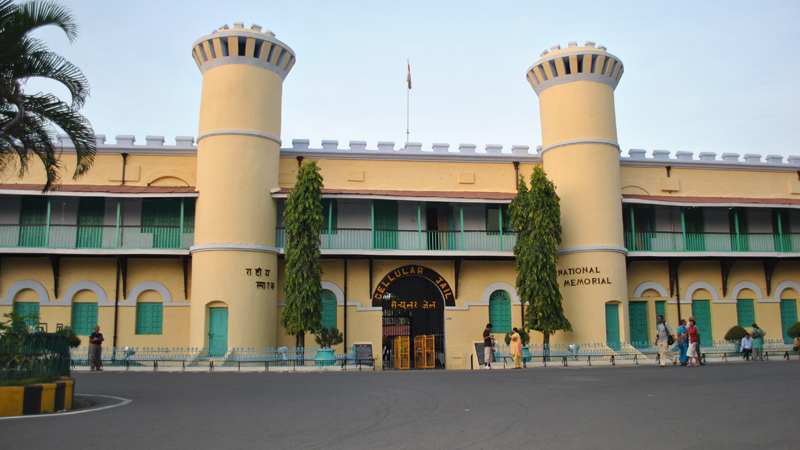
Cellular Jail is Port Blair’s colonial-era prison, now a national memorial to the freedom fighters held in its solitary cells. It opens Tuesday to Sunday, 9 am to 4:45 pm with a midday break, and hosts an evening light and sound show. Indian entry is Rs 30. Here is how to plan your visit.
What is Cellular Jail?
Cellular Jail is a three-storey brick prison at Atlanta Point in Port Blair, built by the British between 1896 and 1906 to hold India’s political prisoners in total isolation. Every prisoner got a single cell with no neighbour to talk to, which is where the name comes from. Today it is a national memorial, and for most travellers it is the first serious stop in the capital.
The building looks out over the water. Stand on the upper floor and you see Ross Island (now Netaji Subhas Chandra Bose Dweep) directly across, with North Bay a little to the left. When I first walked in, the sea breeze and the quiet caught me off guard. This is a calm, weighty place, not a photo-op you rush through in ten minutes.
Why is Cellular Jail called Kala Pani?
Kala Pani means “black water.” The phrase carried real fear. For a mainland Indian in that era, being shipped across the open sea to the Andamans meant losing home, family, and social standing, often for life. The ocean itself was the punishment, a barrier that made escape and return feel impossible. That dread is why “Kala Pani” became shorthand for the harshest sentence the British could hand down.
A short history of Cellular Jail
Construction ran from 1896 to 1906. The bricks were shipped in from Burma, and the original walls were a dull puce colour. The design was deliberate. Seven wings radiated from a central watchtower like spokes of a wheel, so a handful of guards in the tower could keep an eye on every corridor. A large bell in the tower raised the alarm.
The cruelty was built into the architecture. The jail had close to 700 cells (sources cite 693 to 698), each about 4.5 by 2.7 metres, and the front of one wing faced the back of the next. No prisoner could see, signal, or speak to another. Solitary confinement was the whole point, meant to stop revolutionaries from organising or sharing ideas.
The cells held some of the biggest names of the freedom movement: Vinayak Damodar Savarkar, Batukeshwar Dutt, Yogendra Shukla, Bhai Parmanand, Barindra Kumar Ghosh, and hundreds of others. Prisoners were forced into brutal labour, pounding coir and turning the oil mill to extract pots of coconut oil by hand each day. The 1933 hunger strike over these conditions cost several lives.
Why only three wings remain today
During the Second World War, Japanese forces occupied the Andamans, and parts of the jail were damaged and later demolished. Of the original seven wings, three survive. The complex became a national memorial in 1969, and the central tower, the surviving corridors, and the gallows are all open to visitors.
What are Cellular Jail timings?
Cellular Jail is open Tuesday to Sunday, from 9:00 am to 12:30 pm and again from 1:30 pm to 4:45 pm. It stays closed on Mondays and on national holidays. The galleries, the cells, and the central tower are all accessible during these hours (as of August 2026, confirm locally before you go, since memorial timings can shift).
The evening light and sound show runs separately, after the daytime memorial closes. Give yourself a full evening if you want to see the jail properly and stay for the show.
How much are Cellular Jail tickets?
Daytime entry is inexpensive. As of August 2026:
- Indian visitors: Rs 30 per person.
- Foreign nationals: Rs 200 per person (reconfirm at the counter).
- Still camera: Rs 200. Children under 5 usually enter free.
- Light and sound show (separate ticket): Rs 300 for adults, Rs 150 for children aged 5 to 12, and around Rs 1,000 for foreign nationals (reconfirm at the counter).
Carry cash. The counters on G.B. Pant Road are cash-first, and card machines can be down. There are ATMs in Aberdeen Bazaar, about two kilometres away, so draw money before you reach the gate.
What is the Cellular Jail light and sound show?
The light and sound show is a 45-minute evening programme held in the open-air courtyard, told from the point of view of the old peepal tree that still stands inside the compound. The narration walks you through the jail’s history and names the prisoners who lived and died here. The original Hindi script was voiced by Om Puri, and the effect in the dark, with the wings lit up behind you, is genuinely stirring.
Show timings (as of August 2026):
- Hindi: 5:50 pm and 7:50 pm every evening, with an added 6:50 pm show on Tuesday, Thursday, Saturday and Sunday.
- English: 6:50 pm on Monday, Wednesday and Friday.
- Peak season: an extra late show around 8:30 pm may be added on busy nights.
Photography and phone use are not allowed during the performance. Sit facing the central tower for the best view, and reach the amphitheatre at least 30 minutes early on weekends and holidays, when seats fill fast.
How do you reach Cellular Jail?
Cellular Jail sits at Atlanta Point in the northeast corner of Port Blair, about two kilometres from Aberdeen Bazaar and roughly four kilometres from Veer Savarkar International Airport. It is easy to reach:
- Auto-rickshaw from Aberdeen Bazaar: about Rs 100 to Rs 200 for the short hop.
- Taxi or hired car: a half-day car covering Port Blair sights runs roughly Rs 1,500 to Rs 2,200.
- On foot: if you are staying near Marina Park or Aberdeen Bazaar, it is a walkable distance.
- From Havelock or Neil: take a ferry to Port Blair first, then a short auto ride to the jail.
You do not need a permit for Cellular Jail itself, unlike some of the outer islands. For the wider picture, see our guides on how to reach Andaman and getting around Port Blair.
When is the best time to visit Cellular Jail?
The dry season, October to mid-May, is the comfortable window, and it matches the best time to visit the Andamans overall. Here is the honest trade-off most people miss.
- December and January: perfect weather, but the biggest crowds and the fullest show seating.
- October, February, March: dry, warm, and noticeably quieter. My pick.
- June to September (monsoon): heavy rain can cancel the open-air show at short notice. Keep a backup evening.
For the daytime memorial, late afternoon works well. You beat the midday heat, walk the cells in softer light, then stay on for the first show at 5:50 pm.
What should you see inside Cellular Jail?
- The central tower: climb up for the view down every surviving wing and out to Ross Island.
- Savarkar’s cell: on the third floor of a surviving wing, kept as it was.
- The gallows room: the room where three prisoners could be hanged at once. Sobering and quiet.
- The Netaji gallery and photo exhibits: in the entrance block, with a library on the freedom movement upstairs.
- Swatantrata Jyot and the martyrs’ memorial: the eternal flame honouring those who died here.
- The oil mill (kolhu): a plain wooden press that shows how punishing the daily labour quota really was.
How to feel the weight of Cellular Jail, not just tick it off
Most people give the jail 30 rushed minutes between a beach and lunch, then wonder why it felt flat. The place rewards slowness, so here is how I’d spend an unhurried half-day, based on several visits.
Start on the ground floor of the surviving wing and walk one full corridor before you photograph anything. Step inside a single cell and pull the door half shut. The room is barely wider than your arm span, with one small ventilation slit set high on the back wall. That slit faces the blank rear of the next wing, so a prisoner could never catch another human eye. Standing there for even a minute, the logic of the design lands harder than any plaque. This was isolation engineered down to the brickwork.
Climb to the central tower next. From the top you see how the wings fan out like spokes, and you understand how a few guards controlled hundreds of men. Then find Savarkar’s cell on the top floor of the far wing. It is deliberately placed where the sea is visible but unreachable, which was part of the cruelty. Sit on the corridor step for a moment. The heat, the silence, and the sound of the waves below do more than any audio guide.
Save the gallows room and the oil mill for last. The oil mill matters more than tourists realise. Each political prisoner was ordered to extract around 30 pounds of coconut oil a day by turning the press by hand, and failing the quota meant flogging or the standing handcuffs. Reading the labour numbers next to that plain wooden press changes how you hear the show later that evening.
For the light and sound show, buy tickets for the 5:50 pm slot and arrive by 5:15. Sit centre or centre-left, facing the illuminated wing and the old peepal tree. When the narration reads the prisoners’ names into the dark, the earlier walk pays off, because you have already stood in the cells those names belonged to. A light shawl helps, since the courtyard turns breezy after sunset.
One practical warning. If you can only choose one, the daytime walk plus one show together is the real experience. The daytime visit alone can feel like a museum, and the show alone skips the physical detail that gives it meaning. Do both, in that order, and give the jail the unhurried time it asks for. It is the one Port Blair stop that stays with you long after the beaches blur together.
Planning your Andaman trip with andamantourism.org
We are a Port Blair based operator, on the ground in the Andamans, not a mainland desk booking from a screen. That matters for a place like Cellular Jail, where show timings shift by season, English shows run only on set nights, and the open-air performance can be called off in the rain. We track those details in real time, book your show and ferry slots, and line up hotels within walking distance of the memorial so an evening visit is easy.
Pair the jail with the rest of the capital using our Port Blair travel guide, or fold it into a full itinerary from our Andaman tour packages. If you want the harbour cruise across to Ross Island and North Bay on the same trip, that is on our Ross, North Bay and Viper Island page.
Conclusion
Cellular Jail is the emotional centre of any Port Blair itinerary. Go in the late afternoon, walk the cells slowly, climb the tower, and stay for the evening show. Carry cash, check the show language for that night, and set aside two to three hours. Do that, and a Rs 30 ticket buys one of the most memorable few hours of your whole Andaman trip.
Ready to plan it? Tell us your dates and we’ll build a Port Blair itinerary around the jail, the show, and the islands across the bay. Get a free quote from andamantourism.org
Cellular Jail FAQs
Is Cellular Jail open on Mondays?
No. The daytime memorial is closed on Mondays and on national holidays. It is open Tuesday to Sunday, 9:00 am to 12:30 pm and 1:30 pm to 4:45 pm.
How much is the Cellular Jail entry ticket?
Indian visitors pay Rs 30 per person, plus Rs 200 for a still camera. Foreign nationals pay a higher rate. The evening light and sound show is a separate ticket at Rs 300 for adults and Rs 150 for children.
What are the light and sound show timings?
Hindi shows run at 5:50 pm and 7:50 pm daily, with an extra 6:50 pm show on Tuesday, Thursday, Saturday and Sunday. The English show is at 6:50 pm on Monday, Wednesday and Friday. Each show lasts about 45 minutes.
How long does a visit take?
Plan for two to three hours if you want to see the memorial properly and stay for the evening show. A rushed daytime walk alone takes about 45 minutes but skips the best of it.
Is photography allowed at Cellular Jail?
Yes during the daytime, with a Rs 200 still-camera fee. Photography and phone use are not allowed during the light and sound show.
Which language is the light and sound show in?
Both Hindi and English. The English show runs at 6:50 pm on Monday, Wednesday and Friday, and Hindi shows run every evening. Check the night’s schedule before you buy.
How far is Cellular Jail from the airport?
About four kilometres from Veer Savarkar International Airport, and around two kilometres from Aberdeen Bazaar. An auto-rickshaw costs roughly Rs 100 to Rs 200.
Can I book the show tickets online?
Show tickets are sold at the on-site counter and are cash-first. Online booking is not reliably available, so on weekends and holidays arrive at least 30 minutes early to be sure of a seat.
Why is Cellular Jail called Kala Pani?
Kala Pani means “black water.” It refers to the punishment of being exiled across the sea to the Andamans, cut off from home and family, often for life.
Is Cellular Jail worth visiting?
Yes. It is the most significant historical site in the Andamans and, for many travellers, the most moving. Combine the daytime walk with the evening show for the full experience.
Do you need a permit to visit Cellular Jail?
No. No permit is needed for Cellular Jail or anywhere in Port Blair. Permits apply only to certain outer islands, not the capital.