
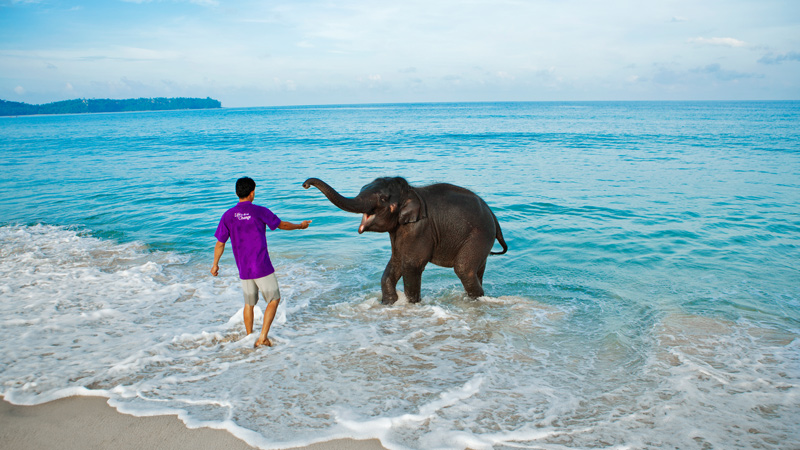
Elephant Beach

Elephant Beach is the water sports beach of Havelock Island, and for most visitors it is a half-day trip built around one thing: getting into the water to see coral and fish. You reach it by a short speed boat ride or a forest trek, spend two to three hours, then head back. It is not a place to laze all day. It is a place to do something.

This guide covers how to get there, what each activity costs, when to go, and where it falls short. If your Havelock time is tight, the last section gives you a straight answer on whether Elephant Beach earns a slot in your plan.

Quick Facts About Elephant Beach

Elephant Beach sits on the northwest side of Havelock Island, about 20 minutes by speed boat from the main jetty. Entry is free and you pay only for the boat and activities. Swimming is allowed in a netted, lifeguarded zone. Plan two to three hours.

Location and distance Northwest Havelock Island (Swaraj Dweep); about 8.7 km by boat from Havelock jetty
How to reach, how long Speed boat from Havelock jetty (about 20 minutes) or a 2.5 km forest trek (about 30 minutes)
Entry fee or permit No entry fee and no separate permit. Speed boat ticket from about 1,000 rupees per person round trip
Timings Boats run morning to early afternoon; the beach clears by late afternoon (confirm current slots)
Best time of day, best months Earliest boat of the day; October to May
Swimming allowed Yes, in a designated netted zone with lifeguards on duty
Activities available Snorkelling, sea walk, glass bottom boat, semi-submarine, jet ski, banana boat, parasailing
Facilities Changing rooms, paid lockers, toilets, patchy shade from shoreline trees. No ATM
Food options nearby A few snack stalls on the beach; proper restaurants are back in Havelock village
Time needed Two to three hours to do it properly

About Elephant Beach: Overview

Elephant Beach is a shallow, coral-fringed beach on Havelock Island, best known for snorkelling and sea walks. The reef starts close to shore, so you see fish within minutes. Bleached fallen trees from the 2004 tsunami still line parts of the sand.

The name comes from the working elephants once kept on this part of the island, not from the shape of the coast. There are no elephants here now. What you get instead is a curved strip of white sand backed by forest, with coral reef beginning one to two metres from the waterline.

Most people fold Elephant Beach into a Havelock day that also takes in Radhanagar and Kalapathar beaches. It is the activity stop, not the sunset stop. The water is calm and shallow, which is exactly what makes the snorkelling and sea walk work for people who have never tried either.

What Makes Elephant Beach Special?

What sets Elephant Beach apart is how close the coral sits to shore. You do not need to swim out or dive deep. Within a few metres of standing depth you are over live reef with reef fish, which is why it draws snorkellers and first-time sea walkers.

On most Andaman beaches you either sit on sand or take a boat out to a reef. Here the reef comes to you. That shallow, protected setting is the whole appeal, and it is also why the beach handles beginners so well. Children, non-swimmers and nervous first-timers can do a sea walk or a glass bottom ride and still see coral.

The trade-off is traffic. Because it is easy and close, it is busy. On a peak-season morning you share the water with a steady rotation of boats and activity slots. If you want an empty beach, this is not it. If you want to see fish without much effort, it delivers.

What to Expect at Elephant Beach?

The shoreline and shade

The beach is a short strip of white sand backed by forest, with large trees and bleached fallen trunks near the waterline. The trees give patchy shade, but there are no sunbeds or umbrellas. Bring a mat if you plan to sit between activities.

The water and coral

The water is shallow and usually calm, with coral starting one to two metres out. The closest reef is patchy and partly bleached, but move a little further and the coral and fish improve. Visibility is best in the morning before boats churn the shallows.

Crowds and timing

Elephant Beach gets crowded by mid-morning in peak season. Boats arrive in waves and activity queues build. The first boats of the day give you the quietest water and clearest visibility, so aim for the earliest slot you can book.

Facilities on the beach

You get basic changing rooms, paid lockers and toilets, plus a handful of stalls selling water, coconuts and snacks. There is no proper restaurant, no ATM and little to no mobile signal. Carry cash and anything you need for a few hours.

Things to Do at Elephant Beach

Elephant Beach is built around water sports. Snorkelling and the sea walk are the main draws, with glass bottom boats and a semi-submarine for people who want to stay dry, plus jet ski, banana boat and parasailing for a faster thrill. Most visitors do one or two.

Activity Approx price (per person) How long Good for
Snorkelling From a short included taster to about 3,500 guided 20 to 30 min in water Seeing coral up close
Sea walk Around 3,500 20 to 30 min Non-swimmers, first-timers
Glass bottom boat About 600 to 1,500 15 to 30 min Kids, staying dry
Jet ski Around 600 A few minutes Quick thrill
Banana boat Around 700 6 to 7 min Groups, families
Parasailing Around 3,500 Short flight plus boat ride Aerial views

Snorkelling

Snorkelling is the reason most people come. A guided session takes you over reef close to shore where fish and coral sit in shallow water. Many speed boat tickets include a brief complimentary snorkel, but a longer guided session costs more and is worth it.

The five free minutes that comes with a boat ticket is a taster, not a proper snorkel. If the reef is why you came, book a longer guided session so you actually get time in the water. A guide also helps with mask fit, which is what ruins most first snorkels.

Sea walk

The sea walk lets you walk on the sea floor wearing a weighted helmet that feeds you air, with no swimming needed. It runs about 20 to 30 minutes and suits non-swimmers and children. It is the most booked activity here, so slots go early in peak season.

You climb down a ladder, the helmet keeps your head dry and supplied with air, and a guide walks you along the sea bed while fish come close. It is the single best option for anyone who cannot swim but still wants to be under the water rather than looking at it from a boat.

Glass bottom boat and semi-submarine

To stay completely dry, take a glass bottom boat or the Nemo semi-submarine, which float you over the reef and let you watch coral and fish through glass. Both suit young children, older travellers and anyone who does not want to get wet. Rides are short.

Jet ski and banana boat

Jet ski and banana boat rides are the fast, splashy options. A jet ski run lasts a few minutes; the banana boat tows a group over the waves for six or seven minutes of bouncing and turns. Neither shows you coral, but both are cheap and good fun.

Parasailing

Parasailing lifts you above the beach on a canopy towed by a boat, with a speed boat ride bundled in. It gives you the aerial view of the reef and forest that no water-level activity does. It runs only when wind and sea conditions allow, so it can be cancelled.

How to Reach Elephant Beach

You reach Elephant Beach from Havelock Island, which you get to by ferry from Port Blair. From Havelock jetty, take a speed boat (about 20 minutes) or trek 2.5 km through forest (about 30 minutes). Most people take the boat; there is no boat pickup for trekkers.

Getting to Havelock first

Elephant Beach is on Havelock Island, so you first reach Havelock by ferry from Port Blair, a trip of roughly one and a half to two hours. Private ferries run several times a day. From Neil Island, connections usually route through Port Blair.

There is no way to reach Elephant Beach directly from the mainland or Port Blair. Havelock is the base. Book your Port Blair to Havelock ferry ahead in peak season, since seats sell out. Booking your Elephant Beach boat slot in advance through a local operator such as andamantourism.org also saves you queueing at the jetty counter on the day.

By speed boat

The speed boat from Havelock jetty is the fast, popular way in. It takes about 20 minutes, covers roughly 8.7 km, and a round-trip ticket starts around 1,000 rupees per person. Boats run in batches from morning to early afternoon, and most tickets include a short snorkel.

Buy your ticket at the jetty counter or online. Boats stop by early afternoon and only a limited number of slots go out each day, so the early ones fill first. Start early and you get calmer water, better visibility and shorter queues for activities once you land.

By forest trek

The alternative is a 2.5 km trek through forest from the road toward Radhanagar Beach, taking about 30 minutes each way. It is free apart from an optional guide. There is no boat back for trekkers, so you return the same way on foot.

The trail is mostly flat but can be muddy and humid, and it is not suited to young children or anyone who struggles with uneven ground. Wear proper shoes and carry water. The trek is a decent option if you like walking and want to skip the boat, but you will not save much time, and you still pay for activities once you arrive.

Best Time to Visit Elephant Beach

Visit Elephant Beach between October and May, when the sea is calm and clear for snorkelling and sea walks. Within the day, take the earliest boat you can, before mid-morning crowds and churned-up water. June to September is quieter but activities can be cut by rough seas.

The water sports are the point, and they depend on sea conditions. In the clear-season months you get reliable visibility and full activity operation. In the monsoon months from roughly June to September, boats and activities run only when the sea allows, and the beach can close on government orders with no fixed dates.

Time of day matters as much as the season. The reef is clearest early, before dozens of boats stir the shallows. By late morning the water is busier and murkier. Late afternoon there is nothing to do, since boats stop and the beach empties out.

Where to Eat Near Elephant Beach

There are no restaurants at Elephant Beach itself, only stalls selling coconuts, water, cold drinks and light snacks like noodles and samosas. For a proper meal, eat back in Havelock village near Beach No. 3 to 5, a short drive from the jetty. Carry cash.

  • Anju Coco Resto: A long-running Havelock favourite near the market, known for fresh grilled fish, thalis and generous portions. A reliable lunch stop before or after your beach trip.
  • Full Moon Cafe: A relaxed cafe on Havelock serving seafood, pasta and big breakfasts, popular with travellers for its laid-back setting and slow-cooked mains.
  • Something Different: A casual multi-cuisine spot doing Indian, Chinese and continental plates, handy when your group wants different things from one kitchen.

Nearby Hotels and Resorts

No one stays at Elephant Beach, since it closes by evening. Havelock’s hotels cluster along Beach No. 3, 5 and 7, from budget guesthouses to premium resorts like Taj Exotica, Barefoot at Havelock and SeaShell Havelock. Base yourself there and day-trip in.

For a beach-front premium stay, the resorts near Radhanagar and Vijaynagar, on Beach No. 7 and 5, are the top tier. Mid-range and budget travellers do well around Beach No. 3 and the village, close to the jetty and to food. Wherever you stay on Havelock, Elephant Beach is only a short drive plus a boat ride away.

Additional Information

Elephant Beach has no entry fee and is open in daytime only, seven days a week, closing when the boats stop in the afternoon. You get lockers, changing rooms and lifeguards, but almost no mobile signal and no ATM. Water sports run on the beach, so carry cash.

Entry Cost No entry fee. You pay for the speed boat (from about 1,000 rupees round trip) and any activities
Timings Daytime only; boats run morning to early afternoon
Address SH4, Havelock Island (Swaraj Dweep), Andaman and Nicobar Islands 744211
Closed on Open all days; may close on government order in rough weather
Locker Facility Yes, paid lockers and changing rooms are available
Life Guards Yes, lifeguards on duty with a netted swimming zone
Water Sports Snorkelling, sea walk, glass bottom boat, semi-submarine, jet ski, banana boat, parasailing
Mobile Connectivity Very limited to none; do not rely on signal (BSNL and Airtel are patchy on Havelock)

Is Elephant Beach Worth Visiting?

Elephant Beach is worth it if you want easy access to coral and water sports, especially as a non-swimmer or with kids. It is not worth it if you want a quiet, scenic beach to relax on, since it is busy and activity-focused. On a short trip, prioritise the snorkelling or sea walk.

Elephant Beach is a doing beach, not a lying-around beach. If your reason for coming is to get in the water and see reef with minimal effort, it is one of the easiest places in the Andamans to do that, and the sea walk in particular is hard to beat for non-swimmers.

Manage your expectations on two things. The coral closest to shore is patchy and partly bleached, so the best reef takes a short swim to reach. And it is crowded. If you have only two or three days on Havelock and you also want Radhanagar’s sunset and a calm swim, Elephant Beach competes for a half-day you may not have.

My rule of thumb: if anyone in your group cannot swim or has never seen coral, go, and book the sea walk or a guided snorkel. If you are a confident snorkeller chasing the best reef, your money often goes further on a Havelock boat dive or a snorkel trip to a quieter site. Either way, go early. A 7:30 or 8 am boat is a different, better beach than the same water at 11.

Related Andaman Information 

These are the named places, permits and operators tied to an Elephant Beach trip, so you know how the pieces fit together when you plan.

  • Swaraj Dweep: The official name for Havelock Island, where Elephant Beach is located.
  • Havelock jetty: The boat and ferry point on Havelock from which speed boats to Elephant Beach depart.
  • Sea walk (helmet diving): An underwater walk on the sea bed using an air-fed helmet, offered at Elephant Beach and at North Bay near Port Blair.
  • Mahatma Gandhi Marine National Park: The protected marine park in the Havelock region that covers coral reefs and islands and keeps the area’s marine life rich.
  • Radhanagar Beach: Havelock’s most famous beach, usually paired with Elephant Beach on a single day itinerary.
  • Kalapathar Beach: A quiet, black-rock-lined beach on Havelock’s east coast, often visited on the same day.
  • Nemo Reef: A Havelock dive and snorkel site where scuba is actually conducted, since Elephant Beach is too shallow for it.
  • Makruzz, Nautika and Green Ocean: Private ferry operators that run the Port Blair to Havelock route you take to reach the island.

Frequently Asked Questions

How do you reach Elephant Beach in Havelock?

Two ways. A speed boat from Havelock jetty takes about 20 minutes, or a 2.5 km forest trek takes about 30 minutes each way. Most people take the boat because it is faster and more comfortable. There is no boat pickup for trekkers, so if you walk in, you walk back.

Is there an entry fee for Elephant Beach?

No, there is no entry fee to the beach itself. You pay only for the speed boat, which starts around 1,000 rupees per person for a round trip, and for any water sports you choose. The forest trek is free apart from an optional guide.

Can you swim at Elephant Beach?

Yes, swimming is allowed in a designated netted zone with lifeguards on duty. Stay inside the marked area. The coral, shallow rocks and constant boat traffic make it unsafe to swim beyond it, so follow the lifeguards’ instructions.

Is Elephant Beach good for snorkelling?

Yes, it is one of the best easy snorkelling spots in Havelock. Coral begins one to two metres from shore in shallow water, so you see fish within minutes. Book a guided session rather than relying on the short complimentary snorkel for real time in the water.

Can you scuba dive at Elephant Beach?

No. The water is too shallow and there is too much boat traffic, so scuba is not run here despite what some booking sites claim. Scuba diving in Havelock happens at dedicated dive sites such as Nemo Reef, not at Elephant Beach.

How much time do you need at Elephant Beach?

Two to three hours is enough. That covers the boat ride each way plus one or two activities like a sea walk or a snorkel. It is a half-day trip, not a full day, since the beach is small and boats stop by early afternoon.

What is the best time to visit Elephant Beach?

Go between October and May, when the sea is calm and clear for water sports. Within the day, take the earliest boat you can. The first slots give you the clearest water and the smallest crowds, before mid-morning boats churn up the shallows.

Are there changing rooms and lockers at Elephant Beach?

Yes, there are paid changing rooms, lockers and toilets near the activity area. Food is limited to a few stalls selling snacks and drinks, and there is no ATM, so carry enough cash for tickets, activities and refreshments.

Is Elephant Beach better than Radhanagar Beach?

They serve different purposes, so most people do both. Elephant Beach is for snorkelling and water sports, with the reef close to shore. Radhanagar is for scenery, a long clean shoreline and sunsets. Elephant Beach is the activity stop; Radhanagar is the relax-and-photograph stop.

Should I take the boat or the trek to Elephant Beach?

Take the boat if you want speed, comfort and the complimentary snorkel that usually comes with the ticket. Take the trek only if you enjoy a humid 2.5 km forest walk and do not mind returning the same way on foot. The trek saves little time overall.