
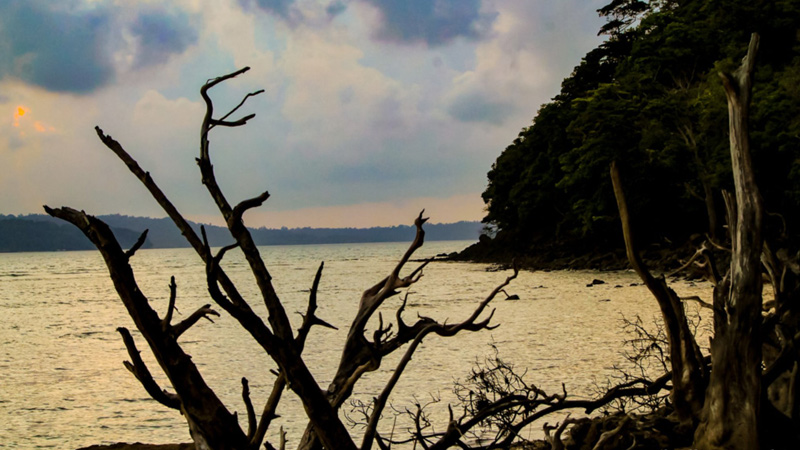
Chidiya Tapu

Chidiya Tapu (also spelled Chidya Tapu) sits at the southern tip of South Andaman Island, about 25 to 28 km from Port Blair, a 45 to 60 minute drive. Locals call it Bird Island and Sunset Point. You come for the sunset, the endemic birds, and the short Munda Pahar trek. Beach entry is free.
Where is Chidiya Tapu and why do people go?
Chidiya Tapu is a small forest village and beach zone at the southernmost road-accessible tip of South Andaman. It falls under Port Blair tehsil, South Andaman district, pincode 744105. The draw is simple: this is the sunset point most Andaman locals send you to, and the mangrove and evergreen forest around it holds a big share of the islands’ resident and migratory birds.
Two beaches carry the name. The long rocky stretch you see from the road is Chidiya Tapu Beach, the main sunset spot. A few kilometres on sits Munda Pahar Beach, quieter, backed by the trail up to the viewpoint. Most first-time visitors see both in one afternoon.
The wider zone also holds the Chidiya Tapu Biological Park, a forest-department wildlife park, plus a forest guest house on a low hill with a wide view over the bay. If you want green over glossy, this corner of the Andamans delivers it.
How do I reach Chidiya Tapu from Port Blair?
The beach is about 25 to 28 km from Port Blair. There is no ferry and no train involved. You reach it by road, and the drive itself is half the pleasure, a run of coastal stretches and forest tunnels of tall trees. You have three ways to get there.
By rented scooter or bike: This is the option most independent travellers pick. Rentals in Port Blair run around 500 rupees a day (as of 2026), and the ride lets you stop wherever the view opens up. Carry your licence, check brakes and fuel before you leave, and keep a light raincoat in the monsoon months.
By cab. The most comfortable choice, and best if you are travelling with parents or kids. A sedan from Port Blair to Chidiya Tapu and back runs roughly 1,500 rupees, an SUV a little more (as of 2026, varies by operator and waiting time). Fix the return and waiting time before you start, because there is nothing to hire out there after dark.
By government bus. The cheapest route by far, around 30 rupees one way on a non-AC bus from Port Blair bus stand. Buses do run daily, but they are infrequent, thin on Sundays and holidays, and they do not wait while you explore. Fine for solo backpackers, awkward if you want to catch the sunset and get back.
If you are coming from Havelock or Neil, you first take a ferry back to Port Blair, then drive south from there. Chidiya Tapu is a Port Blair side trip, not a Havelock one.
What is the best time to visit Chidiya Tapu?
The comfortable window is November to April, the dry season, when skies stay clear, the sea breeze is cool, and sunset colour is at its cleanest. December and January are the peak of that window for birding and photography.
For the day itself, reach the sunset point at least 30 minutes before the listed sunset time. The richest colour builds in the golden-hour window just before the sun drops, and the good viewing spots fill up, so arriving early beats arriving late.
Monsoon runs May to October and brings heavy rain, rougher seas, and slippery forest trails. It is not a write-off if you like empty places and dramatic skies, but the road has rough patches and the birds are harder to spot in the wet. For birding specifically, the cool early mornings from December through February are the sweet spot.
What is there to do at Chidiya Tapu?
Watch the sunset
This is the headline. The wide western view over the Bay of Bengal and the colour that floods the sky before the sun drops make Chidiya Tapu the sunset stop most Port Blair itineraries build around. Bring a camera and get your spot early.
Birdwatching on Bird Island
The name is literal. The forest here shelters a large share of the Andamans’ endemic birds, and early morning is when they show. Keep an eye out for the Andaman Woodpecker, Andaman Bulbul, Andaman Drongo, Andaman Treepie, and various parakeets and sea eagles. Carry binoculars, wear muted colours, and stay quiet on the trail. A guided dawn birding walk, usually starting around 5 am, gives you the best odds and someone who knows the calls.
Trek to Munda Pahar viewpoint
A moderate walk of about 1.5 km one way, roughly 45 to 60 minutes, runs through dense forest to a high point above the sea at the southern tip. The path is uneven with a few inclines, shaded most of the way. At the top you get an open view of the Bay of Bengal, with Rutland Island across Duncan Passage to the south and waves working the cliffs below. Wear proper shoes and start with enough daylight to get back.
Visit the Chidiya Tapu Biological Park
Run by the forest department, this park sits near the tip and works well for families and slower mornings. Entry is around 20 rupees for Indian visitors and 50 rupees for foreign nationals, with children under 5 free and camera charges extra (as of 2026). It opens roughly 9 am to 4 pm, and some sources list a Monday closure, so confirm locally before you build it into your day. Expect saltwater crocodiles in enclosures, native birds, deer and small mammals, and shaded forest paths. It is a calm, educational stop rather than a big zoo.
Picnic and slow down
There are shaded benches near the beach and a genuinely peaceful feel to the place once the day-trip crowd thins. Bring snacks, sit under the trees, and let the birdsong and sea do the work. A few small stalls near the parking area sell tea, packaged snacks, and coconut water, so top up before you settle in.
What should you avoid or skip at Chidiya Tapu?
Do not plan to swim. The main beach is rocky underfoot, currents can be strong, and saltwater crocodiles have been reported along this stretch of coast. Local safety boards and lifeguards flag it for a reason. Wade at the edge if you must, but treat this as a look-and-photograph beach, not a swim beach. There are better swimming beaches elsewhere in the islands, like Radhanagar on Havelock.
Do not arrive after dark or linger too late. The forest road has little lighting and the beach zone effectively winds down by early evening, so head back once the light goes. Do not expect a restaurant strip either; dining right at the beach is deliberately limited to keep the area clean, so carry water and eat on the way.
One more honest note. Mobile network here is patchy to non-existent. Tell someone your plan before you leave Port Blair, and do not count on maps loading once you are deep in the forest stretch.
Chidiya Tapu vs Munda Pahar: which beach is which?
They get muddled online, so here is the clean version. Chidiya Tapu Beach is the longer rocky stretch you reach first, and it is the primary sunset viewing spot. Munda Pahar Beach is the endpoint a few kilometres further, quieter, and it is where the short trek to Munda Pahar viewpoint begins. People lump both under “Chidiya Tapu,” but they are separate beaches with a small drive between them. See both if you have the afternoon; prioritise Chidiya Tapu Beach if you only want the sunset.
A local’s honest read: the one hour most visitors get wrong
The standard Chidiya Tapu plan sells it short. It gets booked as a sunset stop, so the usual routine is a lazy 3 pm lunch in Port Blair, a drive down, an hour on the sand, sunset, done. That routine gives you the weakest version of the place.
Chidiya Tapu is two different destinations depending on the hour, and the better one is the morning. Arrive at first light and the forest is loud with birds you will never hear at 5 pm, because the endemic species that give Bird Island its name are dawn feeders. The Andaman Woodpecker drumming, the Treepie’s rasp, parakeets crossing the canopy: that is a 6 am event, not an evening one. By late afternoon the birds have gone quiet and you are left with a rocky beach and a crowd waiting for the same sunset.
The better approach is a full day, not a half day. Start before dawn for the birding and the Munda Pahar trek while the forest is cool and shaded. The 1.5 km climb that feels sweaty at noon is a pleasure at 7 am, and the viewpoint is clearer before the midday haze builds. Then take the middle of the day slow, tea and pakoras at one of the roadside shacks on the way back up, and come down again for the sunset. You bookend the day with the two things Chidiya Tapu does best and skip the mediocre middle.
The drive is a real part of the trip, not just transit. The road south crosses the Sippighat flats, where the 2004 tsunami sank farmland into a shallow lagoon that has since become a birding zone of its own. Egrets, herons, and waders stand around in the drowned fields, and it is one of the easiest places near Port Blair to photograph waterbirds without any trek at all. It is easy to blur past at 40 kmph, so slow down, pull over safely, and give it ten minutes.
And a practical one, learned the hard way: fuel up in Port Blair before you drive out. There is no reliable petrol pump once you are on the Chidiya Tapu road, and a scooter running dry in a low-network forest stretch is a bad afternoon. Fill the tank, check the brakes, carry water. The place rewards people who treat it as a proper half-to-full day, not a rushed evening tick-box.
Chidiya Tapu day plan at a glance
Half day (afternoon and sunset)
- 3:00 pm leave Port Blair after lunch
- 3:45 pm pause at the Sippighat flats for waterbirds
- 4:15 pm reach Chidiya Tapu Beach, walk the shoreline
- 5:00 pm hold the sunset point
- After sunset tea and snacks, then drive back before full dark
Full day (better for birders)
- Pre-dawn leave Port Blair
- 6:00 am birding in the forest as it wakes up
- 7:00 am Munda Pahar trek in the cool
- Midday rest and tea on the route
- Late afternoon return for the sunset
Planning your Andaman trip with andamantourism.org
We are based in the Andamans, not on the mainland, and that is the difference that shows up in the small decisions. We know which morning slots give you the best birding, when the Chidiya Tapu road is worth a scooter and when a cab makes more sense, and which shacks on the route serve tea worth stopping for. Our team lives with the seasons, the permit rules, and the ferry timings that mainland agents read off a screen.
If you want Chidiya Tapu built into a wider Port Blair and islands plan, we can shape it around your dates, your pace, and the birding or sunset priority that matters to you. Reach out through our Andaman tour packages or the enquiry form, and you will be talking to people who have stood on that beach at both 6 am and 6 pm.
Chidiya Tapu will not give you water sports or beach clubs. It gives you birds, a real trek, and the cleanest sunset near Port Blair, and it does that better than anywhere else on the south coast.
Frequently asked questions about Chidiya Tapu
Why is it called Chidiya Tapu or Bird Island?
“Chidiya Tapu” (also spelled Chidya Tapu) means Bird Island in Hindi. The name comes from the many resident and migratory birds that live in the forest around the beach, most active at dawn and dusk.
Where is Chidiya Tapu located?
At the southernmost road-accessible tip of South Andaman Island, about 25 to 28 km south of Port Blair, in Port Blair tehsil, South Andaman district.
How far is Chidiya Tapu from Port Blair and how long does it take?
Roughly 25 to 28 km, about a 45 to 60 minute drive depending on traffic and how often you stop for the views.
Is there an entry fee for Chidiya Tapu?
The beach and sunset point are free. The Chidiya Tapu Biological Park charges around 20 rupees for Indian visitors and 50 rupees for foreign nationals, with children under 5 free and camera charges extra (as of 2026).
Can you swim at Chidiya Tapu Beach?
Swimming is not advised. The seabed is rocky, currents can be strong, and saltwater crocodiles have been reported along this coast. Treat it as a viewing and photography beach.
What time does Chidiya Tapu open and close?
The beach runs on daylight, roughly sunrise to sunset, and the forest road winds down after dark. The Biological Park keeps its own hours, about 9 am to 4 pm, and some sources list a Monday closure, so confirm locally before a park visit.
What is the best time to see the sunset at Chidiya Tapu?
Arrive at least 30 minutes before the listed sunset time. The best colour builds in the golden-hour window just before the sun reaches the horizon, so early arrival gets you both the light and a good spot.
How much time should I spend at Chidiya Tapu?
Most visitors spend three to four hours for an afternoon and sunset. Birders and trekkers who come at dawn often make a full day of it.
Are there food options at Chidiya Tapu?
Only small stalls near the parking area selling tea, packaged snacks, and coconut water. Proper restaurants are on the drive down, not at the beach, so carry water.
What birds can I see at Chidiya Tapu?
Endemic and resident species like the Andaman Woodpecker, Andaman Bulbul, Andaman Drongo, and Andaman Treepie, plus parakeets and sea eagles. Early morning gives the best sightings.
Is Chidiya Tapu worth visiting?
Yes, if you want the best sunset near Port Blair, serious birding, and a forest trek. No, if you are after swimming, water sports, or nightlife, which this quiet corner does not offer.