

A Local’s Honest Guide
Neil Island rewards the traveller who slows down. It is barely nineteen square kilometres of paddy fields, palm groves and coral shallows, yet it holds three of the most distinct beaches in the whole Andaman chain, plus a rock arch you can only reach when the sea pulls back. Most visitors give it a rushed half day on the way to somewhere else. That is the first mistake.
Suggested Read: Top restaurants in Andaman and Trekking in Andaman
The best places to visit in Neil Island are Laxmanpur Beach for its long low-tide sunsets, Bharatpur Beach for snorkelling and water sports, the Natural Bridge for its wave-carved rock arch that surfaces only at low tide, Sitapur Beach for sunrise, and Ramnagar Beach for quiet. Divers add boat sites like Margherita’s Mischief, Junction, K-Rock and Bus Stop, all a short ride from the jetty. Neil Kendra, the island’s main market village, ties it together with food, scooter rentals and ferry access. Together these five beaches and the dive sites cover nearly everything worth seeing on the island.
Best Places in Neil Island at a glance:
| Place | Distance from jetty | Entry fee | Best time | Time needed | Best for |
| Laxmanpur Beach | ~2 km / 10 min | Free | Sunset | 1–2 hrs | Sunset, limestone rocks |
| Bharatpur Beach | ~550 m / 5 min | Free | Before 10 am | 1–3 hrs | Water sports, safe swimming, families |
| Natural Bridge (Howrah Bridge) | ~2 km + 10–15 min walk | Free | Low tide only | 1–1.5 hrs | Rock arch, tide pools, photos |
| Sitapur Beach | ~5 km / 15 min | Free | Sunrise | 1–2 hrs | Sunrise, quiet mornings |
| Ramnagar Beach | ~4 km / 10–15 min | Free | Late afternoon | ~1 hr | Solitude, snorkelling (strong swimmers) |
| Sir Hugh Rose Is. (Chhota Neil) | Boat charter, south tip | Forest Dept permit | Day visits only | Half-day | Snorkelling, birdlife |
| Neil Kendra Market | At the jetty | — | Evening | ~20 min | Supplies, food, rentals |
A quick note on the name. On 30 December 2018 the island was officially renamed Neil Island to Shaheed Dweep, and neighbouring Havelock to Swaraj Dweep, marking the 75th anniversary of Netaji Subhas Chandra Bose hoisting the tricolour in Port Blair in 1943. Shaheed means martyr. On the ground, though, locals, ferry boards and most maps still say Neil, so you will hear both used interchangeably. Nothing about the island itself changed, only the name on the paperwork.
I have been back to Neil across four seasons, and the thing that keeps pulling me in is how little it has been flattened by tourism. You can still watch a fisherman haul a net at Sitapur while the sky goes pink, then eat a hot vegetable thali at a market shack for the price of a coffee back home. Here is exactly where to go, who each spot suits, how to reach it, and what to know before you turn up.
Places to Visit in Neil Island: Beaches, the Natural Bridge and Dive Sites
Laxmanpur Beach
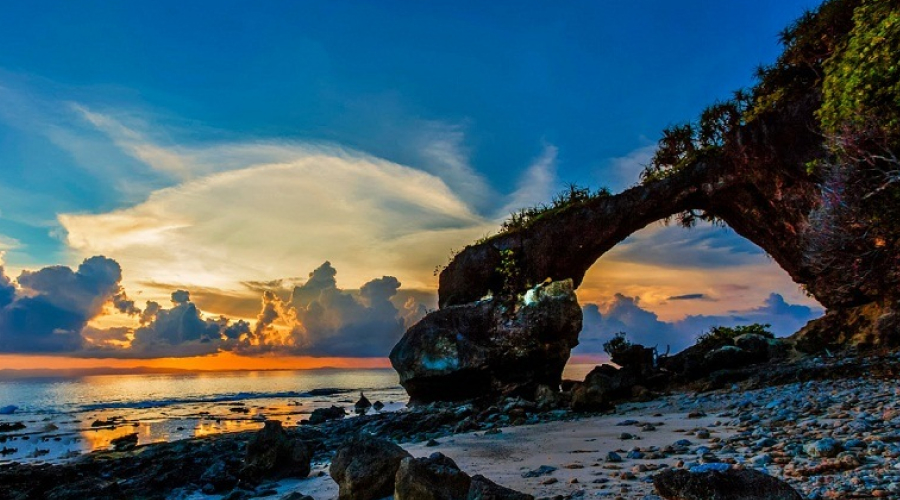
Quick facts: Distance: ~2 km / 10 min by scooter from Neil Kendra jetty | Entry fee: Free | Best time: Sunset (late afternoon–evening) | Time needed: 1–2 hours | Best for: Sunset, limestone rock formations, slow walks
Why it is a must-visit. This is where Neil does sunset better than anywhere else in the archipelago, and it earns the reputation. A wide, pale sweep of shell sand runs out into shallow water so flat that at low tide you can walk out fifty metres and still be ankle deep. Dead coral, shells and the odd starfish litter the flats. When the sun drops, the whole beach turns copper. On a clear evening you can even make out Havelock across the water. It is one of the calmest evenings you can have in the Andamans.
Best for. Couples, photographers, and anyone who wants a slow, no-agenda evening. Families with small kids like the shallow water too.
How to reach it from the jetty. Roughly two kilometres west of Neil Kendra. Ten minutes by auto or rented scooter, or a flat twenty-minute cycle ride if you are keen.
What you need to know. Come 45 minutes before sunset for a spot on the rocks. Sandflies bite at dusk so carry repellent. Pair it with the Natural Bridge, a 10–15 min walk along the same shore at low tide. Wear sandals you can walk into water with, since the low-tide flats are sharp with broken coral. Carry drinking water, as the few tea and shell stalls near the entrance shut early. The evening crowd builds around 5 pm in season, but the beach is long enough that you can always find an empty stretch by walking left.
Bharatpur Beach
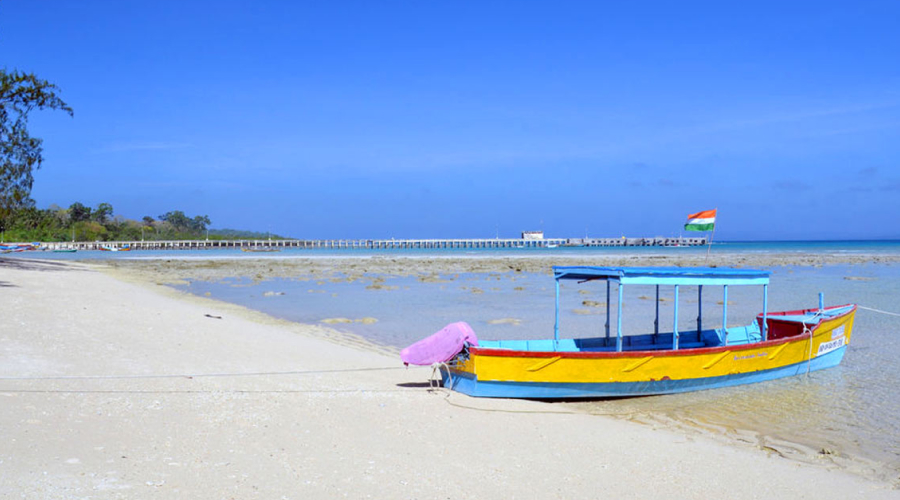
Quick facts: Distance: ~550 m / 5 min from Neil Kendra jetty | Entry fee: Free | Best time: Morning, before 10 am | Time needed: 1–3 hrs | Best for: Water sports, safe swimming, families
Why it is a must-visit. Bharatpur is the island’s water-sports hub, and the only Neil beach where the sea sports actually run. Snorkelling, scuba, glass-bottom boat rides and jet skis all launch from here because the reef sits close to shore and the bay is protected. The water is a startling turquoise. Slip on a mask off the beach and you will see coral gardens, sergeant majors and clouds of small reef fish within minutes.
Best for. Families, first-time snorkellers, groups, and anyone who wants to try the sea without a boat trip. The glass-bottom boat is the easy option if you would rather stay dry.
How to reach it from the jetty. It is the closest beach to the ferry jetty, barely 550 metres from Neil Kendra. Five minutes by auto, or a short walk if you are travelling light.
What you need to know. Go in the morning, ideally before 10 am, when the water is clearest and the day boats have not churned it up. Water sports typically run between 9 am and 4 pm and no prior booking is needed, though rates are fixed by the local boat association, so confirm the price before you step on the boat. The sun is brutal here with little natural shade, so reef-safe sunscreen, a hat and water are non-negotiable. This is the busiest beach on the island because it doubles as the arrival point, so early is calmer.
Natural Bridge (Howrah Bridge)
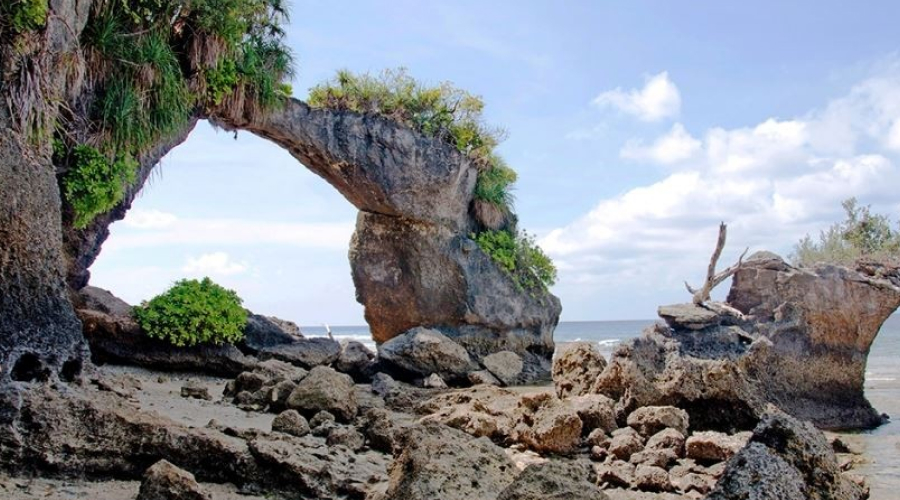
Quick facts: Distance: ~2 km / 10 min + 10–15 min walk from Neil Kendra jetty | Entry fee: Free | Best time: Low tide only | Time needed: 1–1.5 hrs | Best for: Rock arch, tide pools, photography
Why it is a must-visit. A natural rock arch that the sea has carved out of the limestone coast over centuries, sitting on the reef shelf near Laxmanpur. The local Bengali community calls it Howrah Bridge. What makes it special is the timing: you can only reach it when the tide is out, and the walk there crosses a living reef bed full of trapped tide pools. I have found octopus, sea cucumbers, sea urchins, bright anemones and darting fish in those pools, sometimes more interesting than the arch itself.
Best for. Curious travellers, families with older kids, and anyone who likes a bit of a scramble with a reward at the end.
How to reach it from the jetty. The path starts near Laxmanpur Beach No. 2, roughly two kilometres from Neil Kendra, about ten minutes by scooter or auto, then a ten-to-fifteen-minute walk over rock and reef to the arch.
What you need to know. This is the one spot on Neil you must plan around the tide chart, because at high tide the whole reef and the bridge sit underwater and there is nothing to see. On a single day the low tide can drop below half a metre while the high tide rises past two, so the difference is total. Check the day’s low-tide window before you set out and aim to arrive about an hour before dead low. Wear closed shoes or sturdy sandals, because the reef rock is slick and edged. A small entry ticket is sometimes collected near the path in season. Local guides wait at the entrance and are worth the small fee, because they know where the good tide pools are and keep you off the fragile living coral.
Sitapur Beach
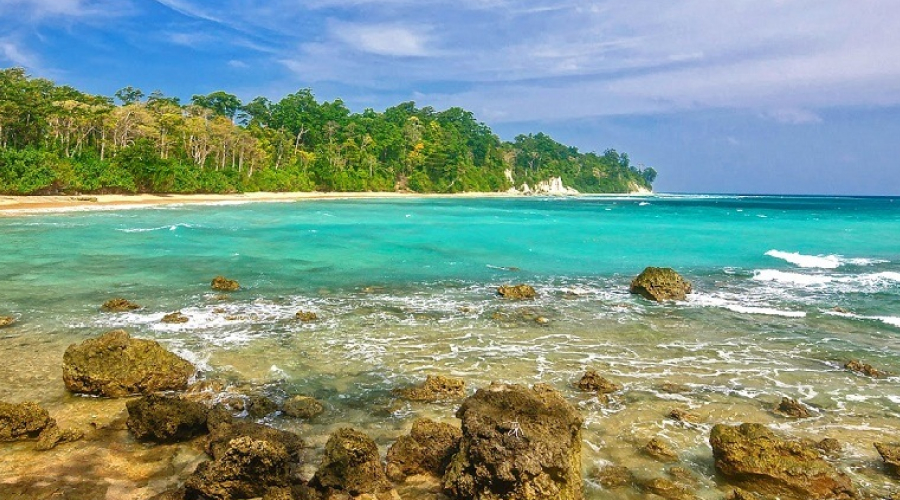
Quick facts: Distance: ~5 km / 15 min by scooter from Neil Kendra jetty | Entry fee: Free | Best time: Sunrise (before dawn) | Time needed: 1–2 hrs | Best for: Sunrise, quiet mornings
Why it is a must-visit. If Laxmanpur owns the sunset, Sitapur owns the sunrise. Sitting on the southern tip of the island, it faces east across open water, and on a clear morning the sun comes up straight out of the sea. It is backed by a low palm ridge and limestone rock and is far quieter than Bharatpur. The waves here have more push than the other beaches, so it feels wilder.
Best for. Early risers, solo travellers who want stillness, and photographers chasing first light.
How to reach it from the jetty. About five kilometres south of Neil Kendra, roughly fifteen minutes by scooter or auto. An hourly local bus also runs from the main bazaar to Sitapur. It is the furthest of the main beaches, which is exactly why it stays empty.
What you need to know. Set an alarm and get there before dawn: the sunrise is the whole point and there is little else to do once the sun is up. There is no entry fee. The sea here is rough with strong currents, so treat it as a beach to watch, not to swim in. Bring your own breakfast or coffee, because stalls open late and often are not running at sunrise. A torch helps on the path if you arrive in the dark.
Ramnagar Beach
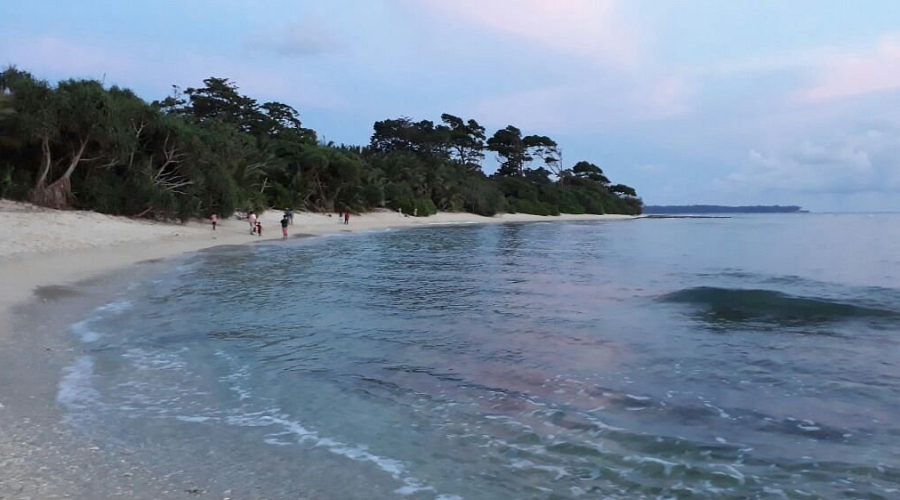
Quick facts: Distance: ~4 km / 10–15 min by scooter from Neil Kendra jetty | Entry fee: Free | Best time: Late afternoon | Time needed: ~1 hr | Best for: Solitude, snorkelling (strong swimmers)
Why it is a must-visit. Ramnagar is the one most day-tripper skip, which is precisely its charm. It is a long, quiet stretch fringed by dense forest, with almost no development behind it. You often get the sand to yourself. There are corals offshore for confident snorkellers, but the real reason to come is to sit, read, and comb the shoreline for shells and driftwood in peace.
Best for. Solo travellers, couples wanting privacy, and anyone tired of crowds.
How to reach it from the jetty. Roughly four kilometres north-west of Neil Kendra, about ten to fifteen minutes by scooter or auto. The last stretch is a rougher track, so ride slowly.
What you need to know. There are few facilities here: no reliable stalls, no toilets, little shade beyond the tree line, so carry what you need and take your rubbish out. The waves run bigger and the corals are sharp, so snorkelling suits strong swimmers only. Go in the late afternoon when the light softens. Because it is remote and unlit, do not linger long after sunset.
Sir Hugh Rose Island (Chhota Neil)
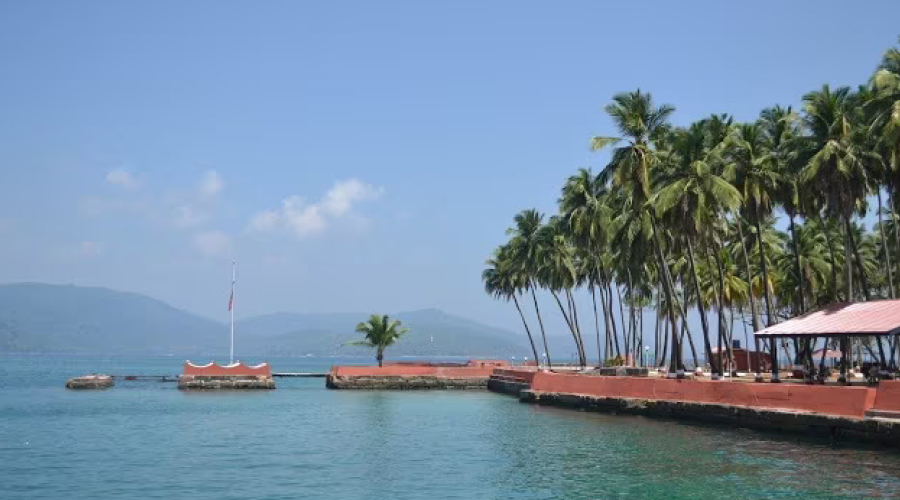
Quick facts: Distance: Chartered boat from Neil’s southern tip | Entry fee: Forest Department permit required | Best time: Day visits only | Time needed: Half-day | Best for: Snorkelling, birdlife
Off Neil’s southern tip lies a tiny uninhabited islet the locals call Chhota Neil, or Little Neil. It is a protected wildlife sanctuary and turtle nesting ground, and the seagrass around it is one of the better places in the region to hope for a dugong, the shy sea cow that grazes these shallows. You reach it by a short-chartered boat, and it is a day visit only, with no overnight stays. Because it is a sanctuary, you need permission from the Forest Department office at Neil before you go, which your operator or hotel can usually arrange. Come for the snorkelling and the birdlife, and go gently: this is a fragile spot, not a party beach.
Why it is a must-visit: Sir Hugh Rose Island (Chhota Neil) is a tiny uninhabited islet off Neil’s southern tip, worth a half-day for clear-water snorkelling and birdlife on a protected shore that few visitors reach.
Best for: Snorkellers and nature lovers happy to arrange a boat. Not an option if you’re short on time or want easy walk-up access.
What you need to know: You’ll need a Forest Department permit and a chartered boat to get there, and only day visits are allowed. It’s a wildlife and turtle-nesting site with no overnight stays. Confirm the current permit process and boat-charter cost before you plan around it
Neil Island Dive Sites
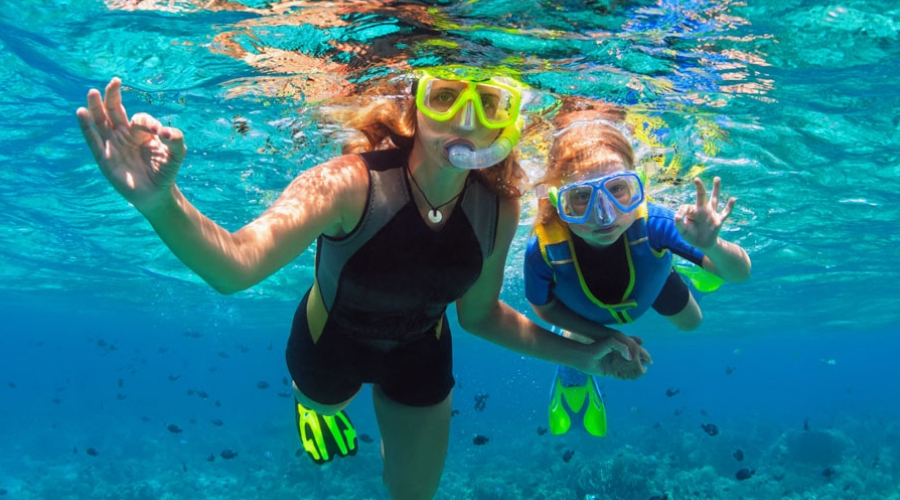
Quick facts: Distance: 10–20 min by boat from Neil Kendra jetty | Season: October–May (best visibility) | Time needed: Half-day per dive trip | Best for: First-time and certified divers, uncrowded reefs
Why it is a must-visit: Neil’s dive sites are quieter and less crowded than Havelock’s, with healthy coral and easy conditions for both first-timers and certified divers. Named sites include Margherita’s Mischief (7–16 m), Junction (~30 m), and Bus Stop and K-Rock.
Best for: Discover-scuba beginners and certified divers who want uncrowded reefs. Visibility drops in the monsoon, so it’s not a rainy-season activity.
What you need to know: Dive season runs roughly October to May, when visibility is best. Sites are a 10–20 minute boat ride from the jetty. A Discover Scuba Dive (no certification needed) reaches shallower sites like Margherita’s Mischief; Junction (~30 m) is for certified divers. Book directly with a Neil dive centre and confirm current prices.
Scuba came to Neil later than Havelock, and that is the appeal. The sites are quieter, the boats smaller, and you rarely share a reef with a dozen other groups. Diving here is boat-based and most sites are only ten to twenty minutes from the jetty. These count as places to visit in Neil Island in their own right, not an add-on, and this is where Neil quietly beats the generic day-trip crowd.
Margherita’s Mischief. The friendliest site and the one most beginners start on, about ten minutes from the jetty at roughly seven to sixteen metres. A sandy bottom strewn with boulders, patrolled by yellow snappers, soldierfish, pufferfish and blue-spotted stingrays half-buried in the sand. Dugongs are sometimes spotted here, though never guaranteed.
Junction. The deepest of the popular sites, dropping to around thirty metres, so it is for certified and more advanced divers. Bigger structure, bigger fish, better for those who already have a few dives logged.
Bus Stop and K-Rock. Bus Stop is a scatter of rock patches on sand where several reef environments meet, so each direction off the mooring line feels like a different dive. K-Rock is a rockier site with good macro life for photographers. Both suit intermediate divers.
What you need to know. The dive season broadly matches the travel season, roughly October to May, when visibility is best. Try-dives for non-certified beginners are widely available and no experience is needed for those, while established centres such as India Scuba Explorers run open-water certification courses. Prices vary by centre and depth, so ask what is included, whether it is a shore or boat dive, and the guide-to-diver ratio before you book. Diving and flying do not mix, so keep your last dive at least eighteen to twenty-four hours before any flight out of Port Blair.
Neil Kendra Market

Quick facts: Distance: At the jetty | Entry fee: None | Best time: Evening (your first day) | Time needed: ~20 min | Best for: Supplies, cash, food, scooter rental
Why it is a must-visit: Neil Kendra is the island’s only real village and where you sort out everything practical, including scooter rental, cash, SIM top-ups, food and supplies, etc. all a short walk from the jetty.
Best for: Stocking up on your first evening and grabbing a cheap local meal. It’s a working market, not a sightseeing stop.
What you need to know: It’s right next to the jetty, so hit it as soon as you arrive. Carry cash, ATMs are unreliable and cards aren’t widely accepted. Twenty minutes is enough to get what you need. Rent your scooter here for the rest of the island.
The island’s only real village, and where you will sort out everything practical: scooter and cycle rentals, the two ATMs, SIM top-ups, and small eateries. It sits right next to the jetty. Spend twenty minutes here your first evening to get the lay of the land, agree scooter rates, and stock up, because most shops and kitchens wind down by 8 to 9 pm. There is no nightlife, and that is the point.
Top Activities in Neil Island by Traveller Type
Neil suits different travellers in different ways. Here is a quick guide to matching the island to who you are travelling with.
| Traveller type | Top activities | Why it works |
| Couples | Sunset at Laxmanpur, sunrise at Sitapur, a slow reef walk to the Natural Bridge | Quiet beaches, soft light and almost no crowds make it easy to slow down together |
| Families | Snorkelling and glass-bottom boat at Bharatpur, tide-pool spotting at the Natural Bridge, shallow paddling at Laxmanpur | Safe, shallow water and short distances suit kids and older parents alike |
| Solo travellers | Cycling the island loop, reading at Ramnagar, dawn at Sitapur, a try-dive at Margherita’s Mischief | Compact, safe and cheap, with easy solo logistics and friendly dive centres |
| Groups and friends | A morning of water sports at Bharatpur, a scooter convoy between beaches, a shared boat dive | Everything is close together, so a group can pack several spots into one day |
| Adventure seekers | Scuba at Junction, macro dives at K-Rock, low-tide reef exploration, a boat to Chhota Neil | Deeper dive sites and reef scrambles give a genuine sense of exploration |
Best Time to Visit Neil Island
The honest window is October to May, and within that there are real trade-offs. December and January bring the best weather and the calmest sea, but also the biggest crowds and the highest ferry and hotel prices, especially around the New Year. October to November and February to March are the sweet spot: warm, mostly dry, clear water for diving, and noticeably fewer people. April and May turn hot and humid, though the sea stays calm and rates drop.
The monsoon months, roughly June to September, are the gamble. The island turns a brilliant green and prices fall to their lowest, but the sea gets rough, ferries are cancelled at short notice, and water sports are often suspended. If you go then, keep your schedule loose and do not book a same-day flight connection out of Port Blair.
How to Reach Neil Island
Neil has no airport. You fly into Port Blair, then take a ferry, as the island is reachable only by sea. From Port Blair, private catamarans such as Makruzz, Nautika and Green Ocean run the crossing in roughly one and a half to three hours depending on the vessel, while the government ferry costs less. From Havelock (Swaraj Dweep), Neil is a short hop of about one hour to one hour fifteen minutes. All ferries dock at the Neil jetty beside Bharatpur, a short walk or auto ride from Neil Kendra.
As of recent seasons, private ferry fares run roughly 1,200 to 1,900 rupees on the popular sailings, climbing higher for premium classes, while the government ferry is cheaper but its tickets open only two to three days before sailing and are largely taken by residents. Book the private ferries online well in advance, particularly in December and January. A smart route is Port Blair to Havelock to Neil and back, so you see both islands without a wasted leg. Build a buffer: if a ferry is cancelled, you want a spare day in Port Blair rather than a missed flight.
Permits for Neil Island
Indian nationals need no permit for Neil, Havelock or Port Blair. Foreign nationals no longer need the old Restricted Area Permit, which was lifted for these islands back in 2018; a valid passport and Indian visa is enough, and your details are recorded at immigration on arrival in Port Blair. Carry a photo ID at all times, because ferry counters and some hotels will ask for it. The one exception is Sir Hugh Rose Island, or Chhota Neil, which is a sanctuary and needs separate permission from the Forest Department office at Neil.
What to Skip or Watch Out For
Not everything on the island is worth your time, and a few things will trip you up. Do not bother visiting the Natural Bridge at high tide; you will walk out to find water and nothing else, so time it or skip it. Skip midday at Bharatpur and Laxmanpur, when the heat and glare flatten both. Do not plan to swim at Laxmanpur or Sitapur, where the currents and drop-offs are genuinely unsafe. Two logistics catch people out: petrol is sold from a single pump that runs dry and closes before sunset, so fuel up early, and the island runs on patchy BSNL signal with only two ATMs, so carry enough cash for your whole stay and download your maps before you arrive. Finally, avoid booking a same-day return ferry and flight, because one cancellation can strand you.
The One Thing Every Neil Guide Skips: Plan Your Day Around the Tide
Here is the piece of local knowledge that will change how your Neil trip actually goes, and almost no guide spells it out in full. On Neil, the tide is not a detail. It is the schedule. Because the island is ringed by a wide, shallow coral shelf, the difference between high and low water reshapes what you can see, hour by hour. Get the timing right and Neil feels magical. Get it wrong and you will stand on a flooded rock wondering what the fuss was about.
Start with the Natural Bridge, because it is the most tide-dependent thing on the island. It only surfaces at low tide. At high tide the arch and the entire reef walk are submerged, and the trip is pointless. Before you plan anything else, look up the day’s low-tide time. Andaman tide tables are published for Port Blair and the offset for Neil is small, so a free tide app or the board at the tourist information centre will get you close enough. Aim to reach the bridge about an hour before dead low water, so you catch the reef as it drains and the tide pools fill with trapped marine life.
Now build the rest of the day around that anchor. If low tide falls in the morning, do the Natural Bridge first, then move to Bharatpur for snorkelling once the water comes back up, because snorkelling is actually better on a rising or higher tide when the reef has enough water over it and the fish move in. If low tide falls in the late afternoon, flip it: snorkel Bharatpur in the morning, then walk the Natural Bridge as the sea retreats, and end at Laxmanpur, which is right next door, for the sunset. On the days when the low-tide window lines up with dusk, you get the rare combination of a reef walk and a sunset in one stretch of coast. Those are the days to aim for if your dates are flexible.
Laxmanpur itself is a low-tide beach in disguise. At high water it is a pretty but ordinary strip. At low tide it opens into a vast flat you can walk far out on, and the sunset light across the wet sand is the shot everyone remembers. Sitapur, on the east tip, is less fussy about tide because it faces open sea, so keep it as your fixed sunrise slot and let the western coast flex around the tide chart.
One safety note that comes from watching people cut it fine. The tide comes back faster than you expect over a flat shelf, and the reef is slippery. Do not wander far out chasing a receding sea, keep an eye on the turn, and start walking back before the water reaches your original entry point. A cheap pair of reef shoes and a fifteen-minute check of the tide table are the two smartest investments you can make on Neil. Do that, and you will have seen the island the way the people who live here actually experience it, not the rushed half-day version most tour circuits sell.
Where to Eat, Including Vegetarian Options
Neil grows much of the Andamans’ vegetables and is nicknamed the salad bowl of the islands, so the produce is fresh and the vegetarian food is a genuine highlight rather than an afterthought. The cluster of stalls and family canteens around Neil Kendra market does honest, cheap plates: South Indian breakfasts of idli, dosa and filter coffee at the jetty canteen, hearty vegetable thalis at lunch, and dedicated pure-veg kitchens for those who want them. Meals run around 100 to 150 rupees at the budget end. Seafood lovers are covered too, and a handful of resort restaurants do sit-down Indian and continental meals at higher prices. Two things to plan for: food is cooked fresh to order, so service is slow, and kitchens close early. Make sure dinner is sorted before 8 pm, because after that most kitchens shut and options vanish fast. If you are chasing a Laxmanpur sunset, order your dinner beforehand or carry a snack.
Planning Your Neil Trip with andamantourism.org
The details that make or break a Neil trip are the ones a mainland travel desk simply cannot know: which low-tide window falls on your dates, which ferry to trust in choppy season, which dive centre runs small groups, and which kitchen is still open when you roll in after sunset. andamantourism.org is a local, Andaman-based operator with people on the ground here. That means real relationships with island hotels and dive centres, current knowledge of ferry schedules and permit rules, and honest advice on seasonal conditions rather than a generic itinerary. If you want your beaches, dives and sunsets timed to the tide instead of to luck, that local knowledge is what you are paying for, and it is the difference between seeing Neil and rushing past it. View our Andaman Tour Packages page to choose a package with Neil Island.
Neil Island FAQ
How many days do you need for Neil Island?
Two nights is the sweet spot. It lets you catch one sunrise, one sunset, a morning of water sports and a properly timed Natural Bridge walk without rushing. A single day only scratches the surface.
Which is the best beach in Neil Island?
It depends on what you want. Laxmanpur for sunset, Sitapur for sunrise, Bharatpur for snorkelling and water sports. Most people rate Laxmanpur as the standout for its low-tide flats and evening light.
Is Neil Island worth visiting over Havelock?
Yes, and ideally do both. Neil is quieter, smaller and cheaper, with a slower pace. Havelock has the bigger-name beaches and busier dive scene. They complement each other, so pair them rather than choosing.
Can you see the Natural Bridge any time of day?
No. It is only visible and walkable at low tide. Check the day’s tide timings and aim to arrive about an hour before dead low water.
How do you get around Neil Island?
Rented scooters are the easiest and cost roughly 400 rupees a day. Autos run point to point, an hourly bus links the bazaar to the beaches, and cycles are a cheap, flat-terrain option since the whole island is small.